Skip to content
Sarah Wynn-Williams’ Careless People has become one of the year’s most discussed business books. Although Meta strongly disputes many of her allegations, the book raises an important question about the nature of leadership:
How do you recognise when leadership becomes dysfunctional?
The overwhelming impression from Wynn-Williams’ account is of an organisation dominated by one individual: Mark Zuckerberg. Human performance would describe this as a steep authority gradient. Authority gradients exist in every hierarchical organisation because leaders have authority and accountability that others do not. They are both inevitable and necessary. A steep authority gradient is not, in itself, dysfunctional. Many highly successful organisations, particularly founder-led companies, operate with steep authority gradients. Problems arise however when the gradient becomes so steep that it restricts communication, challenge and feedback.
Leadership becomes dysfunctional when the steepness of the authority gradient starts to impair the performance of the whole team. Team members may become less willing to challenge. Bad news is softened. Alternative views are not heard—or worse, remain unsaid. Colleagues increasingly look upwards rather than towards one another. Feedback loops weaken. Confirmation bias grows. Leaders become more confident in their own judgement, while others become more inclined to comply rather than to contribute.
The leader may not even intend this it to happen. It is simply how people often behave when authority becomes concentrated.
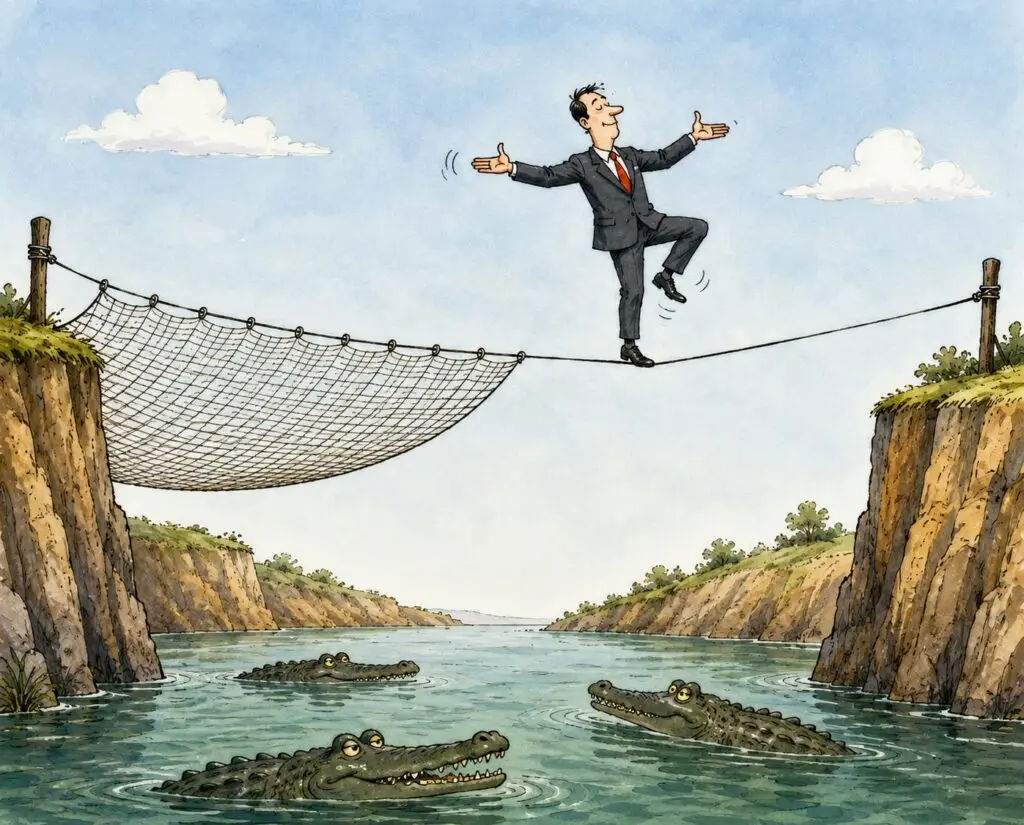
Dysfunctional leadership can still be highly successful
Facebook has become one of the world’s most successful companies, but commercial success is not proof that leadership is functioning well. In fact, success can make dysfunctional leadership harder to recognise, because it appears to validate existing behaviours.
That is why boards should never judge leadership solely by outcomes.
Dysfunctional leadership may continue to produce outstanding financial performance while the organisation’s ability to work effectively as a whole steadily deteriorates. Communication, teamwork, challenge and learning all become weaker. The results may not appear immediately in the profit and loss account, but they often emerge elsewhere—in lower employee engagement, innovation, reputation, public trust or strategic mistakes.
If Wynn-Williams’ account is broadly accurate, Facebook’s struggles over misinformation, privacy, children’s safety and public policy may illustrate the consequences of those weakened feedback loops. Not because anyone was necessarily unethical or uncaring, but because intelligent, committed people became more vulnerable to blind spots, confirmation bias and normalisation of risk.
The lesson extends far beyond Facebook.
Every board should treat a steep authority gradient as a risk factor.
Yes, organisations with steep authority gradients may remain highly successful for long periods in certain circumstances, but they also carry increased risks to communication, challenge, situational awareness and decision-making.
There are mitigations that boards can employ:
- Actively seek feedback. Directors should spend time below board level, meet senior executives individually and ensure everyone receives robust 360-degree feedback.
- Discuss regularly the board’s own human performance: not simply strategy and financial performance, but leadership, teamwork, communication, challenge, situational awareness and decision-making.
- Be most vigilant when everything appears to be going well. Success can create the illusion that leadership is working well, precisely when challenge is less likely but most valuable.
Most boards will, at some point, encounter a steep authority gradient in their company. The issue is not whether the CEO is a strong character. It is whether the board can recognise when authority has become so concentrated that it is weakening the whole team’s ability to think, communicate and decide effectively.
Sign up below to receive new articles as soon as they are posted