Skip to content

Humans in the Boardroom #11
In December 1978, an experienced airline captain spent so long investigating a possible landing-gear problem that his aircraft ran out of fuel. His crew repeatedly noted the diminishing level of fuel, but the captain didn’t react. United Flight 173 ran out of fuel and crashed in Oregon, killing ten people and injuring 23 others.
The investigation into what happened had profound effects on the understanding of human performance in aviation. The lessons learnt are still valid today for any situation in which humans are under stress, particularly in the boardroom.
What happened?
The flight was approaching its destination at 17.12 when the crew experienced an unusual thump and vibration as the landing gear was lowered. An indicator light failed to illuminate, leaving them uncertain whether the undercarriage was safely down, although a physical marker indicated that it was. The captain abandoned the approach and, with about an hour of fuel left, entered a holding pattern, while the crew investigated the problem and prepared for an emergency landing.
The crew became absorbed in diagnosing the landing-gear problem, discussing what might have happened, what they should do about it, but deferring to the senior captain. At 18.03, one of the crew said they had 3,000 lbs left (that’s about 15 minutes’ worth). Even this didn’t spur the captain into emergency action, nor did the other crew protest at the captain’s lack of urgency. At 18.13, with all engines failed, out of fuel, the crew finally declared an emergency. Less than a minute later, the aircraft crashed into suburban Portland.
Why did this happen?
- The captain became pre-occupied with the landing gear problem, which was fully survivable (in fact the gear was down and locked), and didn’t seem to appreciate the fatal fuel state.
- The crew, who were more conscious of the fuel state, didn’t speak up enough to force the captain to respond to the dwindling supplies.
- The crew failed to think through their risks. This flight arrived with an hour’s fuel (a fairly standard safety margin) yet the captain still didn’t take emergency action when it was down to around 15 minutes’ worth left, with the airport still about 10 minutes away.
It would be easy to blame the stupidity of the captain, as we wouldn’t have made this mistake, would we? But this pilot was very competent, professional and experienced. In this particular situation, he – and his crew – suffered from human performance issues that affect us all: distraction, fixation, limited attention, situational awareness (ie loss of awareness of the most crucial issue) and poor teamwork.
We usually get away with these human factors, but occasionally we get caught and the consequences can be disastrous. How many of us have made a mistake, for example, in driving a car, where one or more of those factors could have led to an accident?
What can we learn from this?
Having a good understanding of human factors is one of the best defences against the damage they can create.
Distraction: If we are aware that we can become distracted, then we can try to guard against it: from referring back to the main point in discussions to avoiding external distractions in a board meeting.
Fixation: We all know people who we think become fixated on one issue to the detriment of the bigger picture. We should challenge ourselves, as we too have a few ‘hot buttons’ ourselves.
Attention: Our attention is a very limited resource. Our brains are just not big enough to focus on everything that is going on at once, so we have to be selective. We should try to choose what we want to pay attention to, rather than allow distraction or obsession to make that decision for us.
Situational awareness: Both individuals and teams benefit from being sure of where they are and where they are going: what’s important and what’s not. Boards should never be afraid to stop and reorientate themselves to make sure there is agreement on this.
Teamwork: It’s much easier to spot these human factors in others than in ourselves. Fortunately, most of us have colleagues, whom we should encourage, even the more junior ones, to spot issues and alert us. It may hurt our egos, but save lives.
In summary
Flight 173 shocked the aviation world, as a terrible example of a leader failing to recognise a major problem, while team members fail to act on it or challenge the leader. This was a factor in developing Crew Resource Management (CRM), which trains flight crews in communication, leadership, teamwork and decision-making. The aim is to ensure that the captain’s authority is supplemented by support and challenge by all crew members, deploying their experience, skills and thinking.
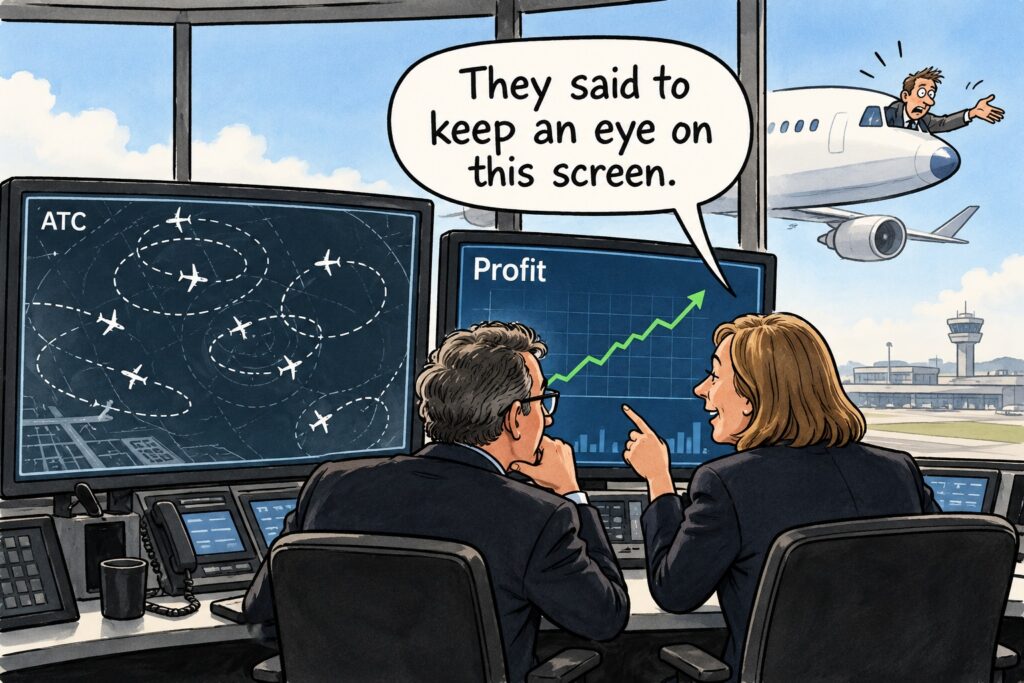
Boards face a similar challenge. Non-executive directors may ask questions and express reservations, but do those interventions genuinely affect decisions? Does the chief executive listen when a director raises an uncomfortable possibility? Can a junior executive flag a concern without fearing the consequences? Does the Board become fixated on one performance measure (such as profit) to the detriment of others? When new information emerges, are earlier decisions reevaluated?
These are some of the issues that led Stephen Jarvis and me to write Why Companies Fail: Exposing Human Performance in the Boardroom. This captain followed all his procedures and manuals, yet failed to manage competing priorities and respond adequately to critical information. In the same way, boards can made major errors whilst still following corporate governance rules.
….
The full NTSB report is available here: https://www.ntsb.gov/investigations/AccidentReports/Reports/AAR7907.pdf
The cockpit voice recording transcription is here:
https://airflightdisaster.com/wp-content/uploads/2010/06/ua173_cvr_transcript.pdf