Skip to content
We’ve all done it. Things are going swimmingly, life feels good, you feel really sure of yourself, and then you forget to do something important. It then all goes pear-shaped very quickly.
We need confidence to get through life: focussing on what matters and taking routine things for granted. You couldn’t function if you constantly worried about forgetting something, being hit by a car or your house burning down. You need to be thinking about how you’ll handle your next meeting. You have to prioritise what to think about, so you also have to put other things aside and not challenge them.
On the other hand, lack of confidence can stop us doing things we’d like to do. You rarely point to someone and think they are successful because they lack confidence.
Confidence is a vital human trait, but it can lead to overconfidence, we question less what we’re doing and stop reflecting on our own performance. It is also contagious. When you work with very confident people, you are likely to become more confident too. It doesn’t necessarily mean that you believe you’re always right. It means you become less willing, or less inclined, to test whether you are right.
When this happens in a board, it sees itself as experienced and successful, and is usually unable to spot its own complacency.
How it starts
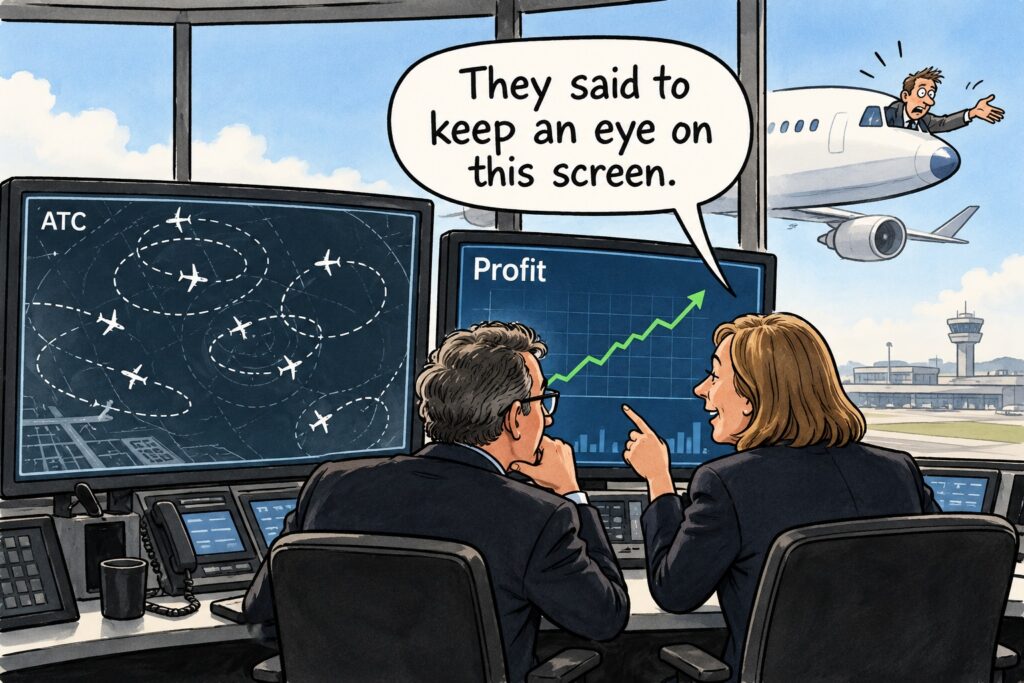
Every board has to decide what deserves attention and what needs challenging. You can’t challenge everything. The problem starts when a board collectively stops paying attention to, or ignores, warning signs that things are going wrong:
- Things are going well and the board is happy;
- The CEO or Chair is autocratic, so directors relax and leave it to them;
- Directors become distracted by other priorities;
- Directors don’t understand enough about the business or its complexities.
How it develops
Identifying overconfidence can be simple: look for reduced questioning. Although difficult to spot in yourself, it can be easier to see in others. But overconfidence can meanwhile become a vicious circle. Less challenge means fewer people bringing bad news. The board hears less bad news and so assumes there really is less bad news, so it challenges even less.
We can’t challenge everything, so how do we know when we’ve stopped questioning enough?
- We accept assumptions without retesting them. For example, do we know what has changed since the plan was developed?
- We explain away warning signs. There might be a tick up in costs or a downturn in revenue. They may be being dismissed as one-off factors, the weather or incorrect data.
- We normalising repeated warning signs. “It’s always like that, and it doesn’t mean anything!”
- We receive less information, or warnings become unwelcome. Maybe management doesn’t allow an update to come to the board. A performance indicator may be dropped because it’s ‘wrong’ or ‘misleading’.
- Our feedback becomes biased or selective. I remember a retailer where we were very happy with customer feedback because it showed us doing better than our rivals. It took a while to dawn on us that the respondents were self-selected supporters — customers who had already chosen us. The feedback was genuine, but it wasn’t impartial.
How to combat it
- Accept that overconfidence is normal human behaviour. It occurs in all of us, not just in business leaders.
- Look for areas where information flow has reduced. What has the board stopped discussing? Is there information that executives would rather not discuss?
- Challenge easy explanations for warning signs, especially when the explanation involves an ad hominem attack. A CEO once told me that the regulator was attacking us because their inspector was a disaffected ex-employee. I looked the inspector up on Linkedin: He’d never worked for us, and his concerns were in fact valid.
- Look critically at explanations of multiple warning signs. Sometimes repeated warning signs make you less likely to react, as you’ve feel you’ve heard it all before.
- Seek out as much feedback as practical, but be careful to challenge whether it is impartial and comprehensive.
- Review directors’ time commitments, especially overboarding. We need their attention.
Takeaway
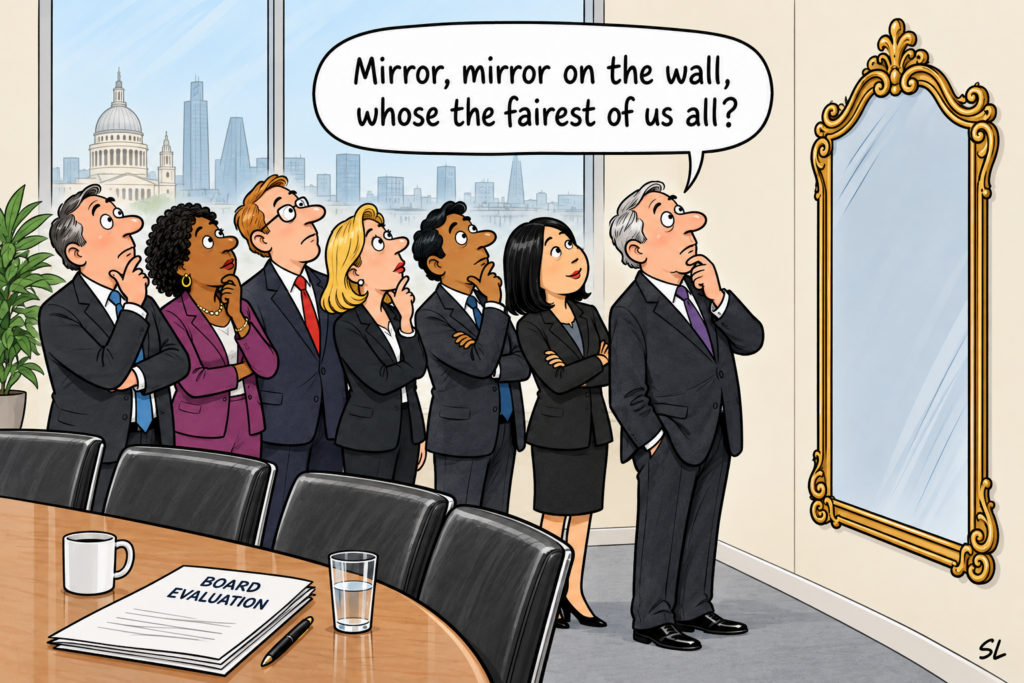
“Do we tend to be overconfident?” should be a basic question in every board appraisal. Personally, I would start with a presumption that you are.
Then list the evidence that you’re not.